From digital ambition to reliable reality: What DIGITAL X 2026 means for Zero Outage
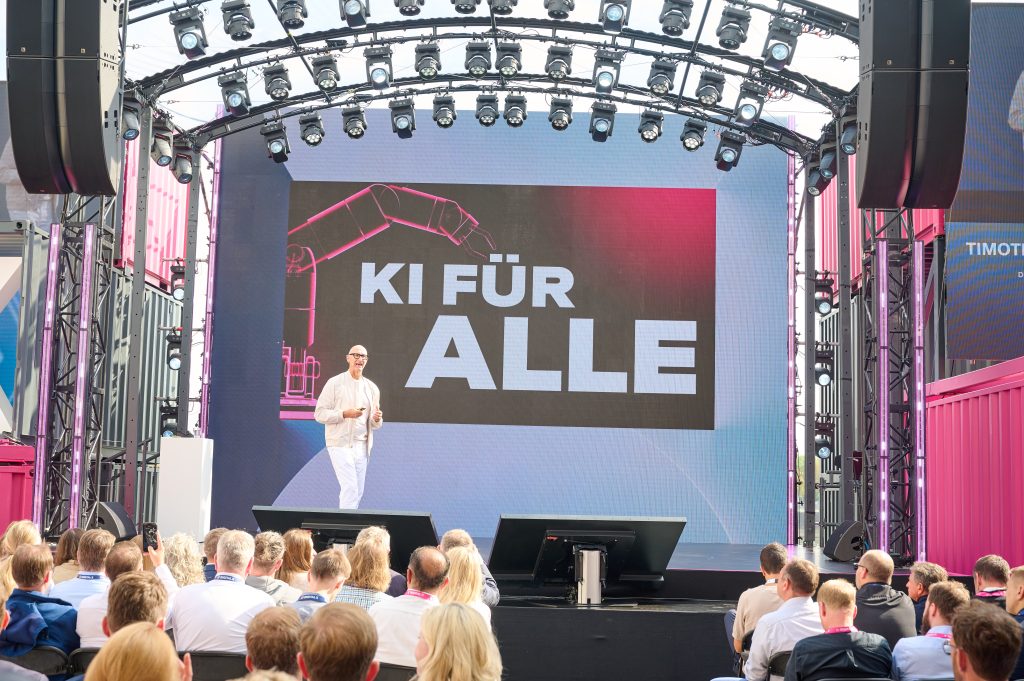
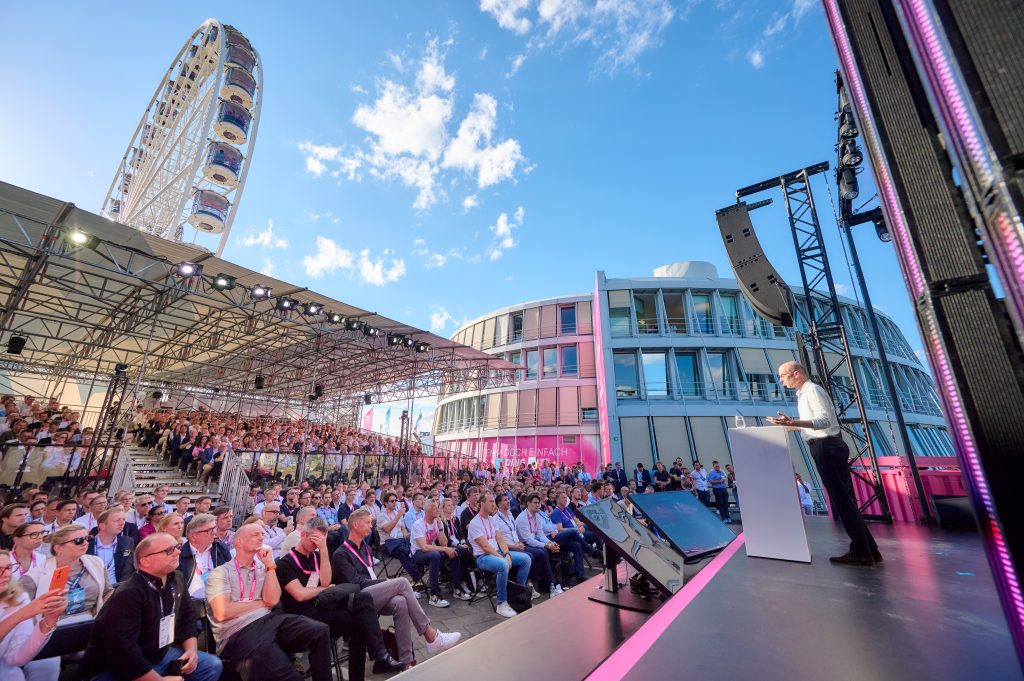
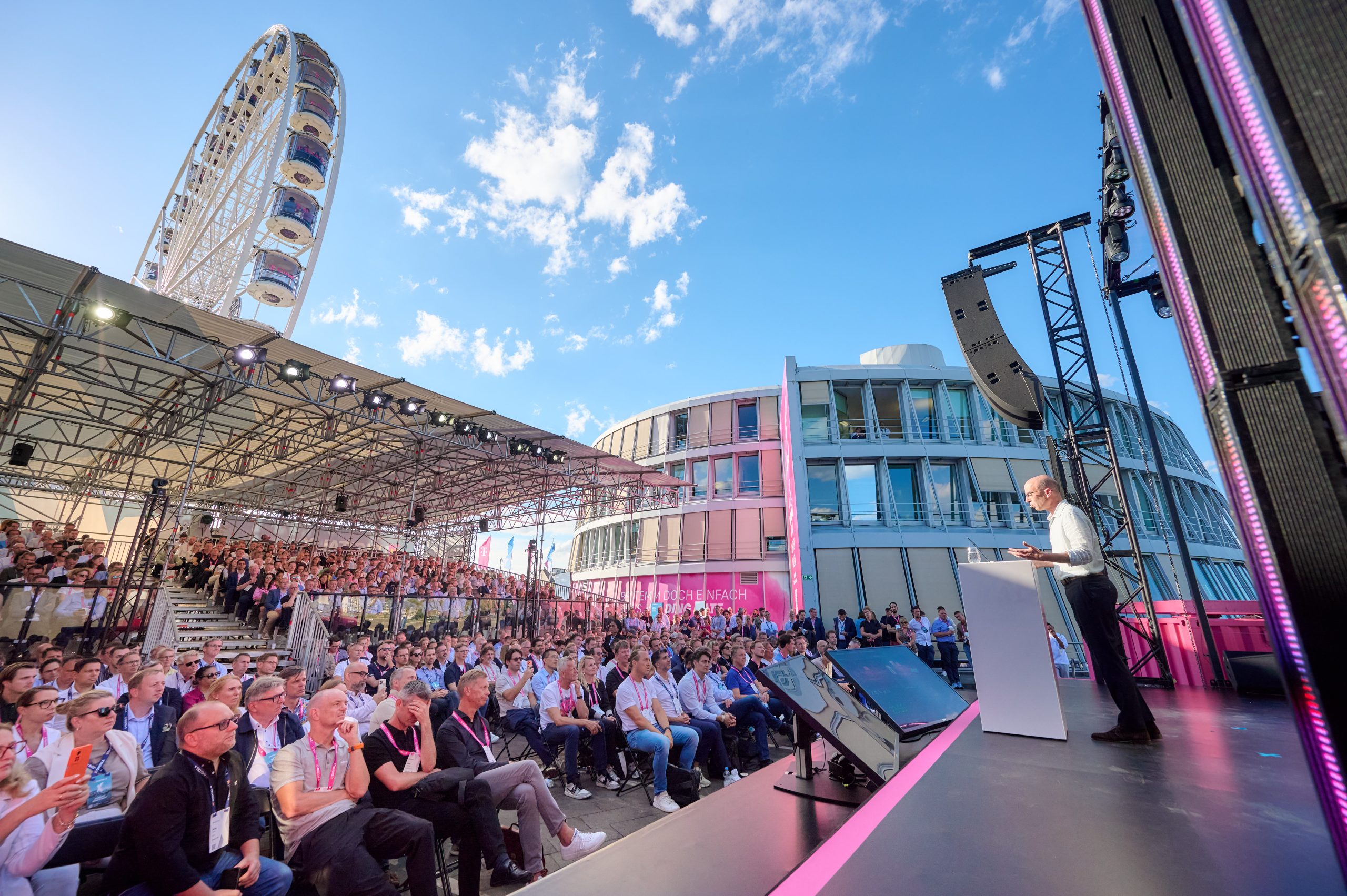
More than 6,000 visitors, two stages, over 90 participating companies, and a Rheinauhafen in Cologne full of conversation: DIGITAL X 2026 wrapped up on September 8th under the motto “Navigate What’s Next.” Anyone who followed the speakers on stage could hardly miss one recurring insight: digital transformation is no longer a question of whether companies adopt new technologies. The real question is how they turn that adoption into reliable value. Securely, responsibly, and at scale.
When AI acts, reliability becomes an architecture question
Few topics dominated the stages as much as artificial intelligence and specifically, how much autonomy AI systems should be given. Historian Yuval Noah Harari put the shift bluntly:
“The most important thing to know about AI is: AI is not a tool, it’s an agent.”
Former Chancellor Angela Merkel argued that humans must remain “in charge” of the new technology which in her view, requires a certain degree of regulation.
Philosopher Richard David Precht warned urgently of the need for a societal “brainstorm with no taboos” to keep pace with the speed of development.
For businesses, this debate is no longer academic. Anthropic’s Roman Howe offered a practical reading of the “human in the loop” principle at DIGITAL X: what matters isn’t that a human accompanies every single step, but that it’s clearly defined where humans carry responsibility. Unlike a chatbot, an AI agent that autonomously accesses data and systems can actually change something a dataset, a business process, a customer relationship.
This is exactly where the Zero Outage perspective begins. When an AI-supported process fails, the fallout doesn’t stop at an unavailable application. Production stalls, decisions are delayed, trust is lost. Reliability therefore has to be built in from the start, from architecture and data through deployment to monitoring and governance. That is essentially what the Zero Outage Industry Standard has described for years: reliable IT services don’t come from a single technology or security measure, but from the interplay of architecture, people, processes, platforms, and security across the entire service lifecycle.
Digital sovereignty is also a question of resilience
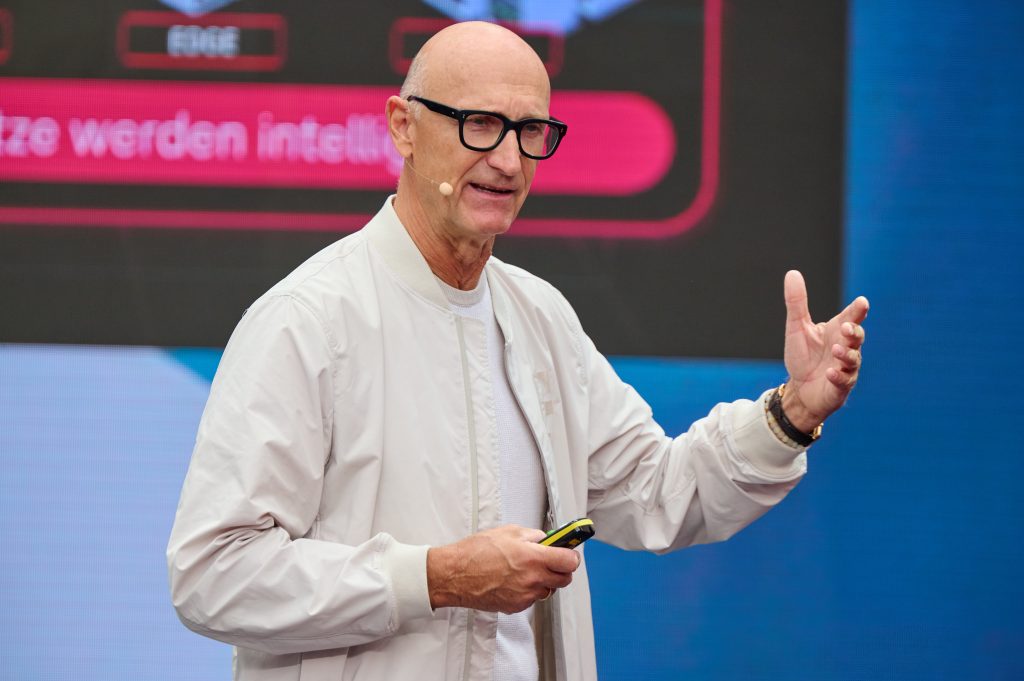
On the main stage, Telekom CEO Tim Höttges put a word front and center that has become a guiding term for the industry in recent months: sovereignty.
“Sovereignty, to me, doesn’t mean protectionism. And sovereignty doesn’t mean ‘Germanness’ either. To me, it means control.”
Control over data, processes, and the use of technology, not a wholesale renunciation of international cutting-edge technology. North Rhine-Westphalia’s Minister President Hendrik Wüst also warned against one-sided dependencies: “One-sided technology dependency endangers our capacity to act as a state, and our economic strength.” According to calculations by the German Economic Institute, the economic potential of combining industry and generative AI alone amounts to €300 billion in additional gross value added.
The numbers show just how wide the gap between aspiration and reality still is: 85 percent of German companies surveyed by Bitkom consider Germany too dependent on US cloud providers yet 43 percent say there currently simply isn’t an equivalent European alternative for their needs.
This, too, is fundamentally a Zero Outage question. Digital sovereignty isn’t just about regulation or picking the right cloud provider, it’s about knowing your own dependencies: Where do critical workloads run? How do you respond if a provider, a technology, or a supply chain suddenly becomes unavailable? Resilient service architectures only emerge when customers, suppliers, and partners work closely together, no organization can ensure reliable digital operations alone.
We are under fire, we are being attacked
Telekom’s Chief Security Officer Thomas Tschersich made clear just how urgent cybersecurity has become, with a number that stops you in your tracks:
“This week alone, we’ve already seen 23,000 DDoS attacks in the network. It’s going up exponentially.”
Marie-Agnes Strack-Zimmermann, Chair of the European Parliament’s Committee on Security and Defence, placed the threat landscape in its geopolitical context: “And we are under fire, we are being attacked.” For mid-sized businesses in particular, the situation is very concrete: 90 percent of victims of digital extortion are small and medium-sized enterprises, according to Germany’s Federal Criminal Police Office (BKA), while the median security team at German companies consists of just three full-time employees.
T-Systems sales lead Elke Anderl distilled the core idea of resilience into a simple formula: “Resilience begins exactly where normal operations, the ideal conditions, stop.” That is precisely the idea the Zero Outage Standard translates into practice: security isn’t a bolted-on extra layer, but an integral part of reliable IT services, interwoven with availability, performance, people, and processes.
“Cloud First” is yesterday’s logic
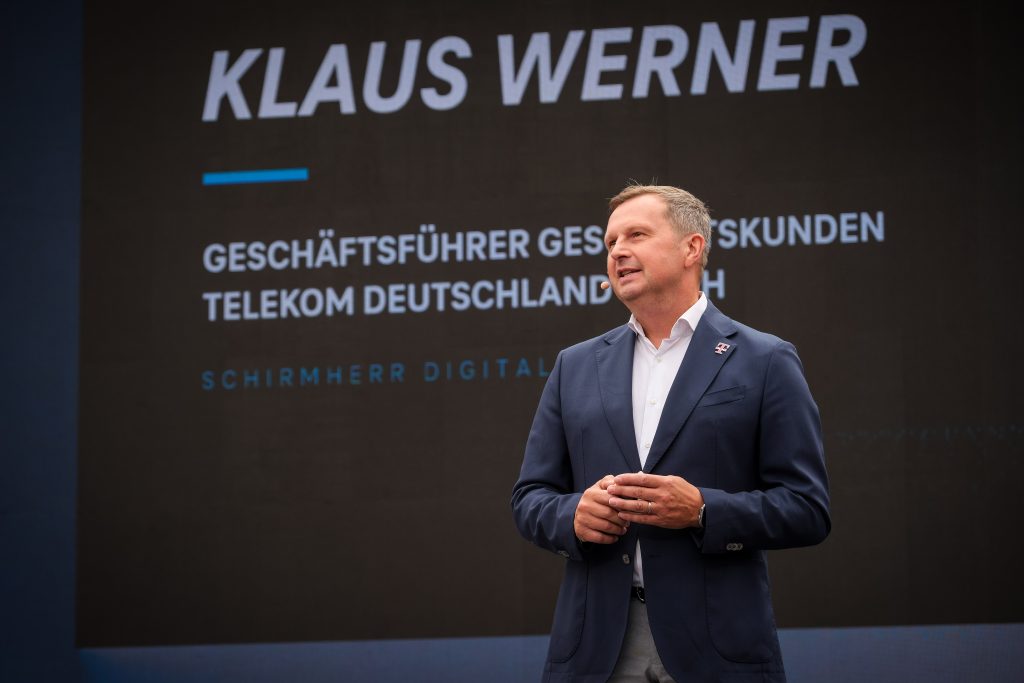
The cloud debate has shifted too. The AI boom is changing companies’ cloud strategies, away from the reflex of moving as much as possible onto one platform, toward the question of where each workload is best placed. Klaus Werner, Managing Director of Business Customers at Telekom Deutschland, said:
“We don’t have a technology problem. We have an impact problem.”
Meanwhile, the global cloud market is growing fast: in the second quarter of 2026, spending on cloud infrastructure services rose to $143.4 billion, according to Synergy Research, a 43 percent increase year-on-year, with generative AI as the key growth driver.
But as the number of applications grows, so does their diversity: a chatbot, a medical AI system, and a decades-old ERP system have completely different load profiles, failure risks, and regulatory requirements. Here too, the Zero Outage principle applies: reliability can’t be bolted on afterward, it has to factor into the placement decision from the very start.
The common thread: From inspiration to implementation
DIGITAL X impressively showcased the opportunities created by AI, cloud, connectivity, and digital platforms. But it also reaffirmed a principle at the very heart of the Zero Outage idea: innovation only creates lasting value once it can be trusted in everyday operations.
For businesses, that means moving from isolated pilot projects to resilient, governed, and measurable services, preparing people, clearly defining responsibilities, testing critical processes, and designing platforms that can withstand disruption.
The future of digital business won’t be decided by the most advanced technology alone. It will be shaped by the organizations that make innovation secure, available, and dependable, day after day, across the entire digital value chain.
DIGITAL X 2026