Human-Centered Resilience: Strengthening People and Teams for Organizational Success
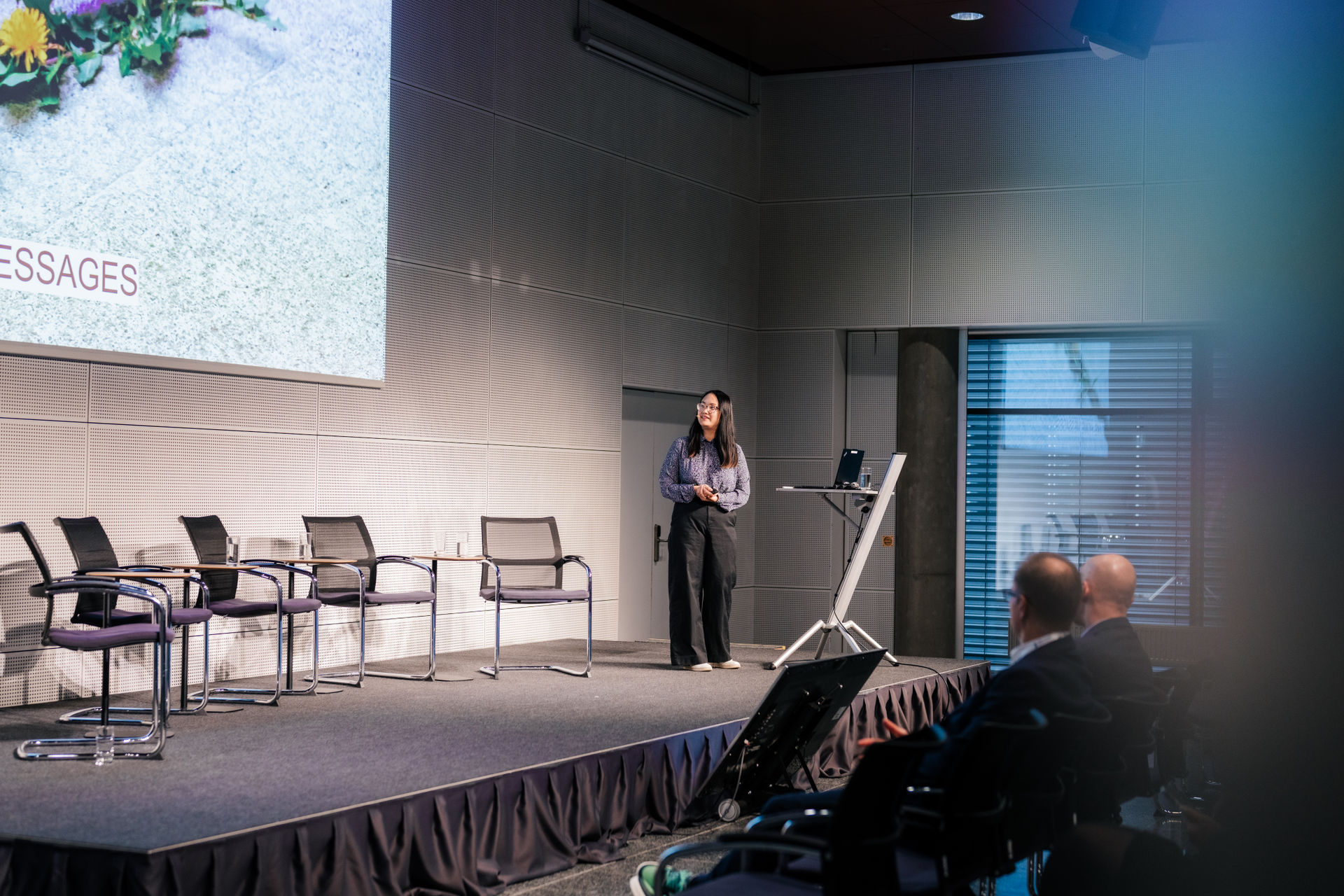
Resilience is a buzzword with many interpretations across sectors and disciplines. In her keynote at the Zero Outage Executive Summit 2025 in Vienna/Austria, Quynh Nguyen, scientist at the Center for Technology Experience at the AIT Austrian Institute of Technology, brought a human-centered perspective to the discussion: resilience starts with the individual and builds from there.
Resilience matters because it is more than a protective mechanism – it is a driver of success. Resilient employees enhance performance, innovation and stability. When we strengthen individuals, we strengthen the entire system.
Drawing on insights from psychology, human-computer interaction and the social sciences, Quynh reframed resilience as more than just “bouncing back” or staying strong in crisis. She described it as a dynamic capacity composed of three interlinked dimensions:
- Resistance: Maintaining function and stability without damage or impairment
- Recovery: Returning from crisis to a stable state of operation
- Reconfiguration: Learning from challenges and emerging stronger than before
One of the main areas of focus at the Center for Technology Experience is Social Experience and one field of research in this area is technology-enabled resilience. This concerns how technologies can be leveraged to support and promote resilience. For example, the research project SURE investigates how to evaluate resilience based on both self-assessments and physiological states and to leverage this information to offer individualized digital interventions to strengthen resilience. And the research project LogoLog aims to investigate and develop an LLM-based agent that can support resilience based on Viktor Frankl’s logotherapy.
These projects show that there are several factors that can influence resilience, acting as levers for strengthening resilience: from personal beliefs to professional and social skills, organizational culture, leadership, social support and even physiological states. Because even the most sophisticated systems depend on the people who sustain them, building human-centered resilience is vital for lasting success.